
Introduction
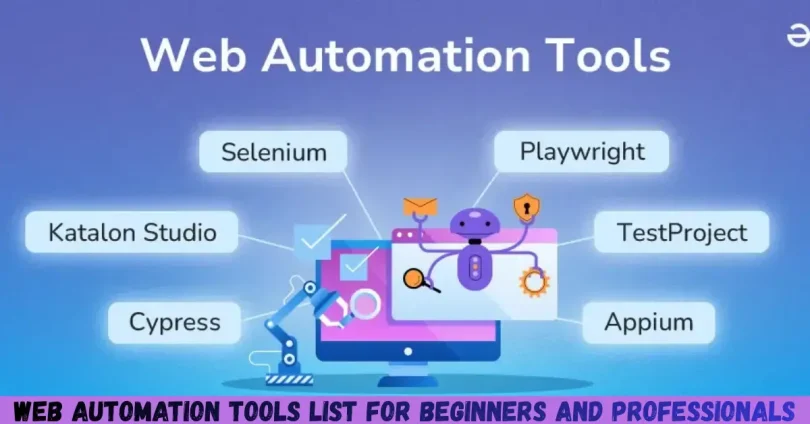
In today’s fast-moving digital world, speed and accuracy matter more than ever. Businesses, marketers, developers, and even small website owners want to save time while improving results. This is where a web automation tools list becomes extremely useful. These tools help automate repetitive online tasks that would otherwise take hours of manual work.
A well-prepared Web Automation Tools List allows beginners and intermediate users to understand which tools are available and how they can be used effectively. From filling out forms and scraping data to testing websites and managing workflows, automation tools reduce human effort and minimize errors. As a result, productivity increases, and teams can focus on more creative and strategic tasks.
What is Web Automation Tools List?
A web automation tools list is a collection of software tools designed to automate tasks performed on websites or web applications. These tasks usually involve actions that humans repeat daily, such as clicking buttons, entering data, downloading files, or checking website performance.
In simple terms, web automation tools act like virtual users. They follow instructions and perform actions automatically based on predefined rules. For example, a tool can log into a website, collect specific data, and store it in a file without manual input.
A proper web automation tools list may include tools for browser automation, testing, data extraction, workflow automation, and monitoring. Each tool serves a different purpose, depending on the user’s needs and skill level.
By understanding this list, users can choose tools that match their goals, whether it is saving time, reducing errors, or improving consistency across online tasks.
Why is Web Automation Tools List Important?
A web automation tools list is important because it helps users make informed choices. Instead of guessing or trying random software, users can compare tools based on features, ease of use, and purpose.
Automation also improves efficiency. Tasks that take hours manually can be completed in minutes. This leads to faster project delivery and better use of resources. In addition, automation reduces mistakes caused by fatigue or distraction.
Another reason a web automation tools list matters is scalability. As businesses grow, manual processes become harder to manage. Automation tools allow systems to scale smoothly without increasing workload.
Finally, having a clear list helps beginners avoid confusion. With so many tools available, a structured overview makes learning easier and less overwhelming.
Detailed Step-by-Step Guide
Step 1: Identify Your Automation Needs
Before choosing from a web automation tools list, clearly define your goals. Decide which tasks you want to automate.
Common examples include:
- Website testing
- Data collection
- Form submission
- Monitoring website changes
This step saves time and prevents unnecessary tool switching later.
Step 2: Understand Tool Categories
Web automation tools fall into different categories. Knowing these categories helps narrow your options.
Main categories include:
- Browser automation tools
- Testing automation tools
- Data scraping tools
- Workflow automation platforms
Each category serves a specific purpose, so match it with your needs.
Step 3: Evaluate Ease of Use
For beginners, ease of use is critical. Many tools in a web automation tools list offer no-code or low-code interfaces.
Look for:
- Visual builders
- Drag-and-drop features
- Clear documentation
These features reduce the learning curve significantly.
Step 4: Check Compatibility
Make sure the tool supports your browser, operating system, and website type. Compatibility issues can cause automation failures.
Also, confirm whether the tool integrates with other platforms you already use.
Step 5: Start with Simple Automation
Do not automate everything at once. Start with small tasks and test results carefully.
For example:
- Automate login
- Automate one form submission
- Review output accuracy
Gradual progress builds confidence and reduces errors.
Step 6: Monitor and Optimize
Automation is not a one-time setup. Websites change frequently, so monitoring is essential.
Regularly:
- Check scripts
- Update workflows
- Fix broken steps
Optimization ensures long-term success.
Benefits of Web Automation Tools List
- Saves time by automating repetitive tasks
- Reduces human errors and improves accuracy
- Increases productivity across teams
- Helps scale operations efficiently
- Offers consistency in task execution
- Supports both technical and non-technical users
- Improves data collection and reporting
- Allows focus on strategic work
Disadvantages / Risks
- Initial setup can be time-consuming
- Some tools have a learning curve
- Website changes may break automation
- Over-automation can reduce flexibility
- Poor configuration may cause errors
- Security risks if tools are misused
Common Mistakes to Avoid
One common mistake is choosing tools without clear goals. This leads to wasted time and unused features. Always define your purpose first.
Another mistake is ignoring maintenance. Automation scripts need regular updates to stay effective.
Some users also automate sensitive tasks without proper security checks. This can expose data and create risks.
Finally, relying completely on automation without human review can cause unnoticed errors. Balance is important.
FAQs
What is the best web automation tool for beginners?
The best tool for beginners is one with a simple interface, clear documentation, and no-code options. Beginners should focus on usability rather than advanced features.
Can non-technical users use web automation tools?
Yes, many tools are designed for non-technical users. Visual builders and templates make automation accessible without coding skills.
Is web automation legal?
Web automation is legal when used responsibly. Always follow website terms, respect data privacy, and avoid harmful activities.
How much do web automation tools cost?
Costs vary widely. Some tools offer free plans, while others charge monthly fees based on features and usage.
Can automation replace human work completely?
Automation supports human work but does not fully replace it. Human oversight is still needed for decision-making and creativity.
How long does it take to learn web automation?
Learning time depends on tool complexity and user experience. Simple tools can be learned in days, while advanced ones may take weeks.
Expert Tips & Bonus Points
Start small and scale gradually to avoid frustration. Document every automation process for easy updates later.
Test automation in a safe environment before live use. This prevents unexpected issues.
Keep backups of scripts and workflows. This helps recover quickly from errors.
Finally, stay updated. Web automation tools evolve rapidly, and regular learning keeps your skills relevant.
Conclusion
A web automation tools list is more than just a collection of software names. It is a practical guide that helps users understand, compare, and apply automation effectively. By using the right tools, individuals and businesses can save time, reduce errors, and improve overall performance.
For beginners, automation may seem complex at first. However, with clear steps and simple tools, the learning process becomes manageable. Intermediate users can further optimize workflows and scale operations confidently.